When you click the link, it will take you to the corresponding page.
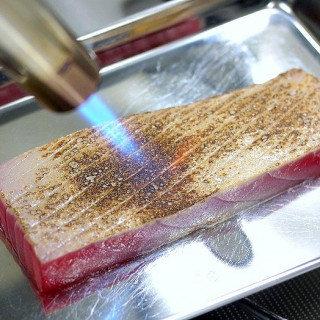
サワラ炙り刺し
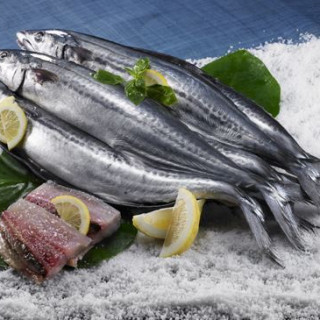
"鰆魚" in Japanese is also referred to as "鰆 (sawara)," which represents mackerel and greenish-blue fish. In Japanese, fish that change their names as they grow are called "出世魚 (shussegyo)," and the Pacific saury belongs to this category. Pacific saury measuring less than 50cm in length is called "サゴシ (sagoshi)" or "サゴチ (sagochi)," while those around 50-60cm are called "ナギ (nagi)" or "ヤナギ (yanagi)," and adults measuring over 60cm are referred to as "鰆 (sawara)." The Chinese character "鰆" is used to symbolize a fish that heralds spring. This is because Pacific saury gather along the coast to spawn during the spring season. The best season for sawara is not spring but rather from autumn to winter when it contains a higher amount of oil, making it especially delicious.
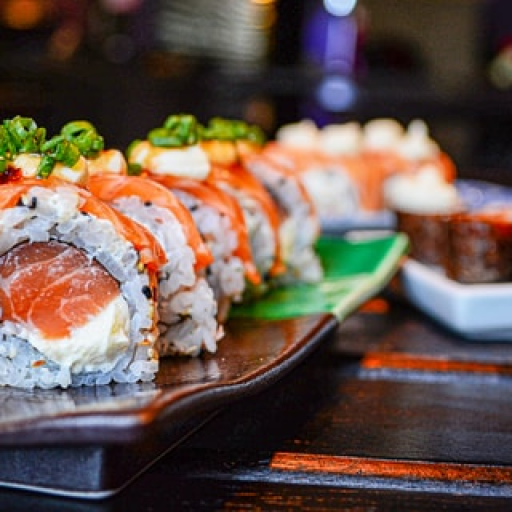
"Aburi" is a noun derived from the verb "Aburu" (炙る) in Japanese, which means to lightly sear or grill the surface of ingredients using direct flame. Unlike general grilling methods that evenly cook the entire ingredient, Aburi involves searing only the surface while leaving the inside uncooked. It is a cooking technique that allows for a contrast in texture and a smoky flavor between the outer and inner parts of the ingredients. Aburi sushi (炙り寿司), where the surface of fatty fish such as salmon or tuna is seared, is a representative example of Aburi cuisine. Even mild white-fleshed fish like sea bream can be enhanced in flavor and texture by searing the skin.